

Cerveno , BS – 2013
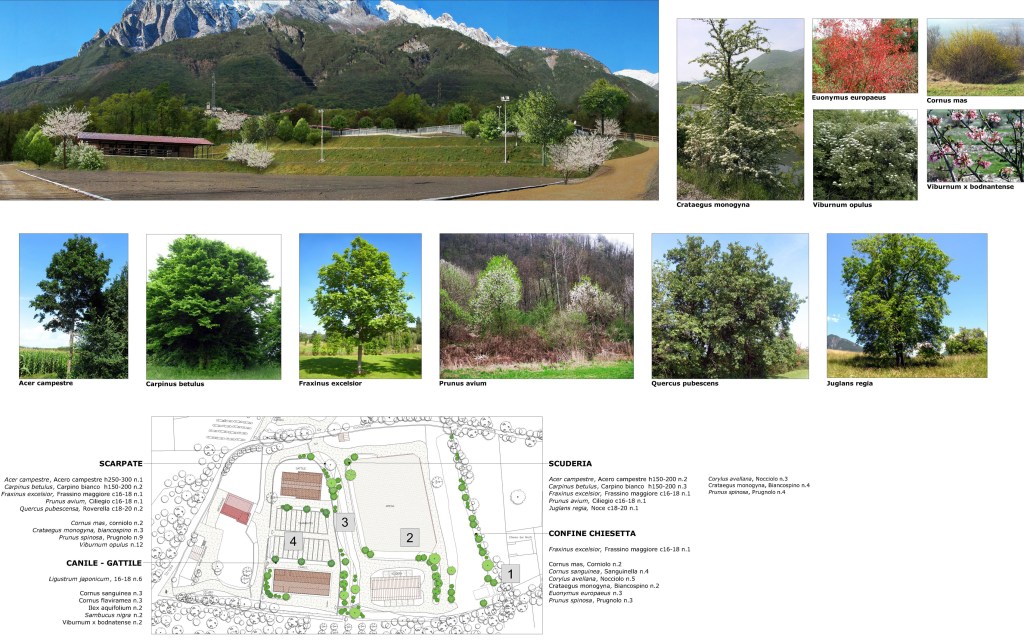
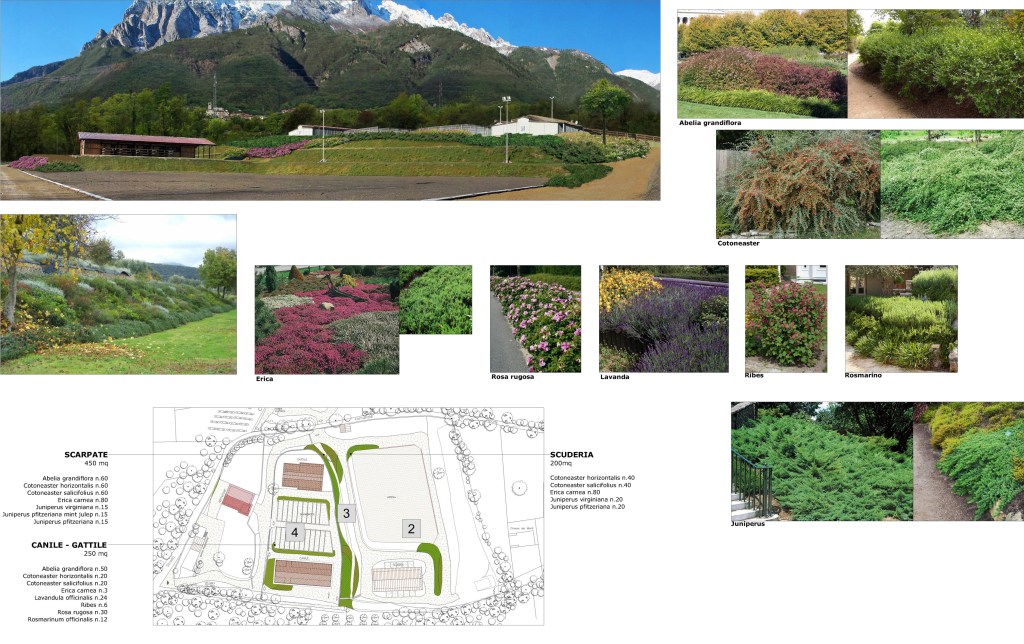
Mitigazione ambientale di una pensione per animali, al fine di conservare e restituire le caratteristiche naturali dell’area. La struttura è inserita in un contesto paesistico di pregio, con scorci sulle creste e crinali dell’alta Valle Camonica e dominato a sinistra dal massiccio della Concarena. La disposizione degli elementi vegetali serve a schermare in maniera naturale i fabbricati maggiormente di disturbo, preservando le visuali di pregio sia dall’interno che dall’esterno della proprietà. In particolare, attraverso la piantumazione sulle scarpate e lungo il confine, viene ripristinata la vista sulla Chiesetta, significativo elemento architettonico del paesaggio storico-culturale. La piantumazione di alberature e arbusti contribuisce alla naturalizzazione e al consolidamento delle scarpate. Le specie tappezzanti riducono la necessità di manutenzione sulle aree con una maggiore pendenza e di difficile accesso. La nuova piantumazione si integra armoniosamente con la vegetazione preesistente, prediligendo le specie autoctone o comuni all’habitat tipico del luogo tra cui: Fraxinus excelsior, Prunus avium, Quercus pubescens, Acer campestre, Crataegus, Corylus e Cornus. L’obbiettivo è di assecondare il naturale rimboschimento dell’area e la colonizzazione spontanea delle specie presenti nel contesto.
| Environmental restoration of a house for animals boarding, in order to preserve and requallificate the natural features of the area. The property is located in a valuable landscape, with views over the crests and ridges of high ‘Vallecamonica’ and dominated by the ‘Concarena’ massif. The green elements create a visual screen for more disturbing buildings, preserving the valuable views both inside and outside of the property. Planting on the slopes and along the boundaries, restores the view of the small Church, significant architectural element of the historical and cultural landscape. Trees and shrubs helps to naturalize and consolidate the slopes. The groundcovers reduce the need for maintenance on the areas with a greater slope and difficult to access. The new planting is harmoniously integrated with the existing vegetation, preferring native species including: Fraxinus excelsior, Prunus avium, Quercus pubescens, Acer campestre, Crataegus, Corylus and Dogwood. The goal is to support the natural reforestation of the area and the spontaneous colonization of the typical species present in the context.
www.acasadimaila.it
18000m²




 claudia arrighetti